Caroline Nasukusa S. CCCU……………………………….
For many young people, the streets of Mbale City used to be their home. Today, a different story is unfolding.
Through an initiative and partnership between the Catholic Care for Children in Uganda (CCCU) and Catholic Relief Services (CRS), since 2022, over 50 vulnerable youths have experienced a life-changing journey toward independent living. Some of these are taken from street life, and others are aging out of children’s homes with nowhere to go or call home.
Experts emphasize that independent living goes beyond earning an income. It is about rebuilding self-worth, reducing vulnerability to exploitation, and preventing a return to the streets. And this is what the initiative is about, restoring dignity.
For many care leavers in Uganda, the transition to adulthood is abrupt and unforgiving. Without family support, foster care, or financial stability, survival often becomes the only priority. CCCU’s program is stepping in to bridge that gap with the generous support of CRS.
Rather than applying a one-size-fits-all approach, participants identify their areas of interest and receive personalized training. Options include mechanics, welding, hairdressing, barbering, music, and small-scale production. Tuition, tools, and, in some cases, start-up capital are fully covered through CRS funding.
Because follow-up is critical, the probation and Social Welfare Officers from Mbale’s Industrial and Northern Divisions closely monitor progress, ensuring that the youths remain on track and well supported. The result of this initiative has been encouraging.
Recently, CCCU team did a follow up during their field trip of 10 vulnerable youths enrolled in November 2025. While these individuals are still undergoing training, there are already signs of hope.
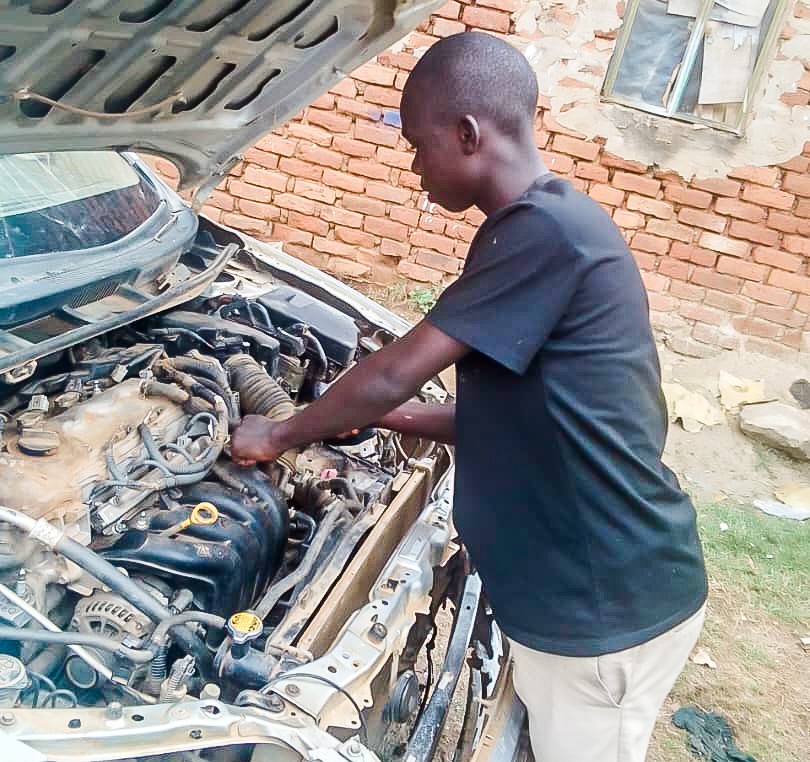
Early results are promising at a local garage where a young mechanic under training, once uncertain about his future, can confidently handle tools. His trainer describes him as disciplined and committed. He can already identify adjustable spanner sizes, use a jack, and assist with wheel repairs under supervision.
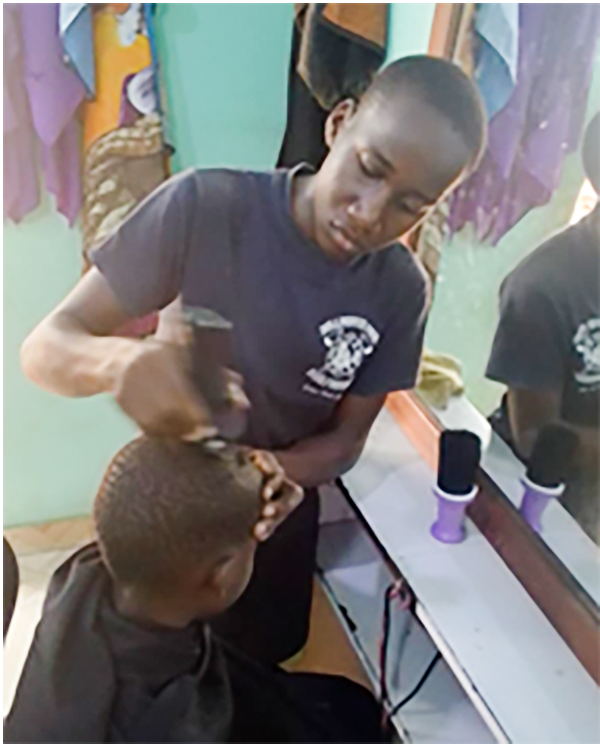
In a barbershop in the same Mbale City, two trainees are steadily building their craft. They now execute popular styles like Shaolin and brush haircuts with growing confidence. “They are consistent and eager to learn,” their trainer notes.
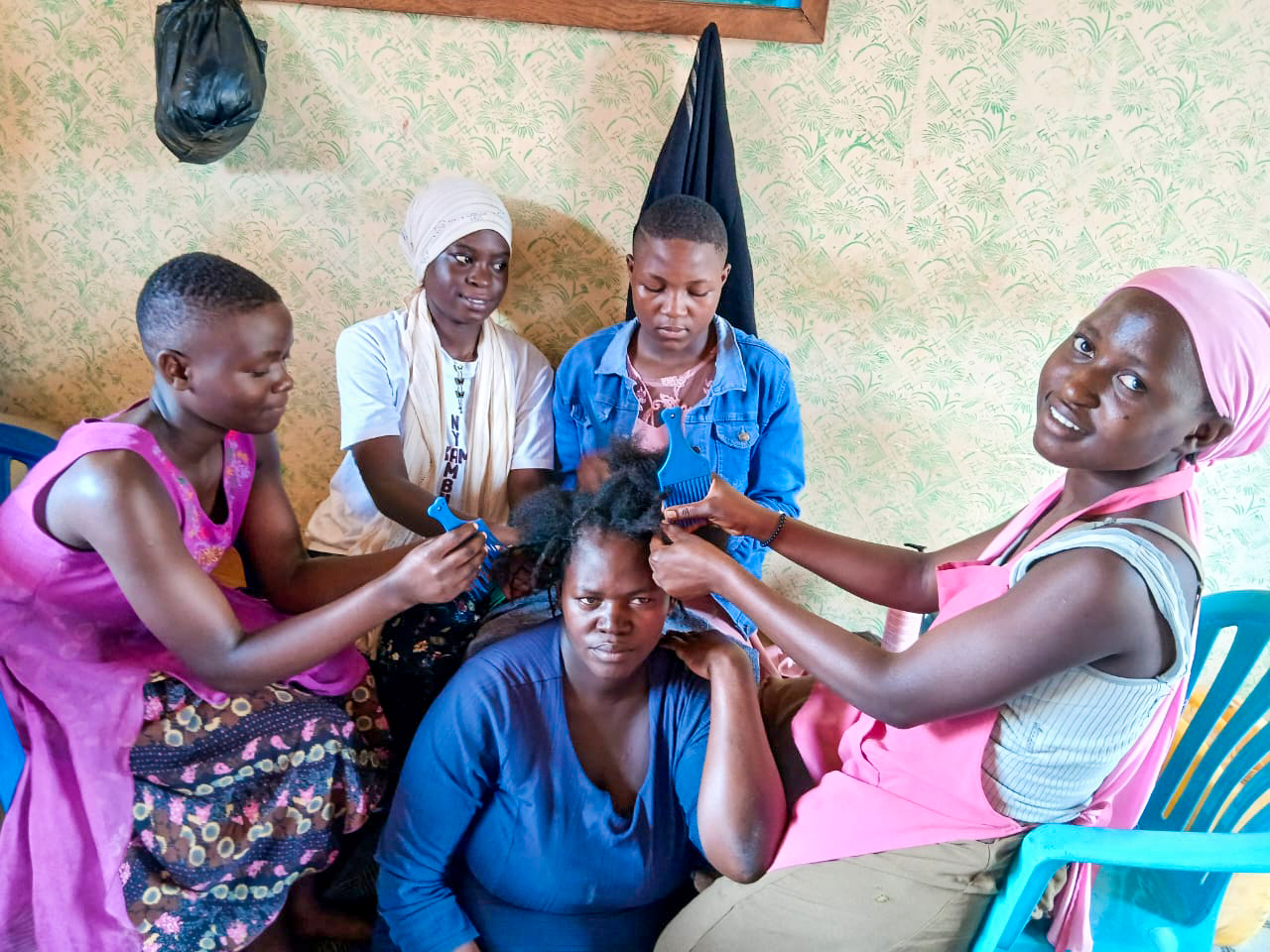
At a hairdressing center, on the other hand, two young women are quietly transforming their lives. They have mastered intricate plaiting styles such as Buswahili and Bututwa (East African hairstyles that involve creative plaiting techniques for natural hair). They are beginning to practice hot combing as well. Their trainer calls them “focused, fast learners with real potential.”
For these youths, the change is not just economic, it is personal. “They are not just learning skills, they are rebuilding their identity,” one of the program officers observed.
The success stories, however, highlight a larger, unresolved challenge. Across Mbale and beyond, many young people continue to leave care institutions without support. Some have no traceable relatives, while others face rejection from extended families. Without intervention, the risk of returning to street life remains high.
CCCU is eternally grateful for the partnership and support from CRS which has lit an incredible first path forward, even though it is now coming to an end.
While CCCU is more than willing to continue the initiative of supporting more care leavers transitioning into independent living, strengthen family-based care solutions, establish safe transitional support structures, scale up vocational training and start-up support, and build holistic, responsible, and empowered young adults, it cannot do it alone.
Every support and contribution changes the story. Every partnership prevents a return to the streets. Every skill learned is a step toward dignity. Every young person given a chance, the outcome is clear: a life redirected.
Together, we can ensure that leaving care does not mean losing hope and that this initiative does not come to an end.