
By Immaculate Tusingwire, MMS
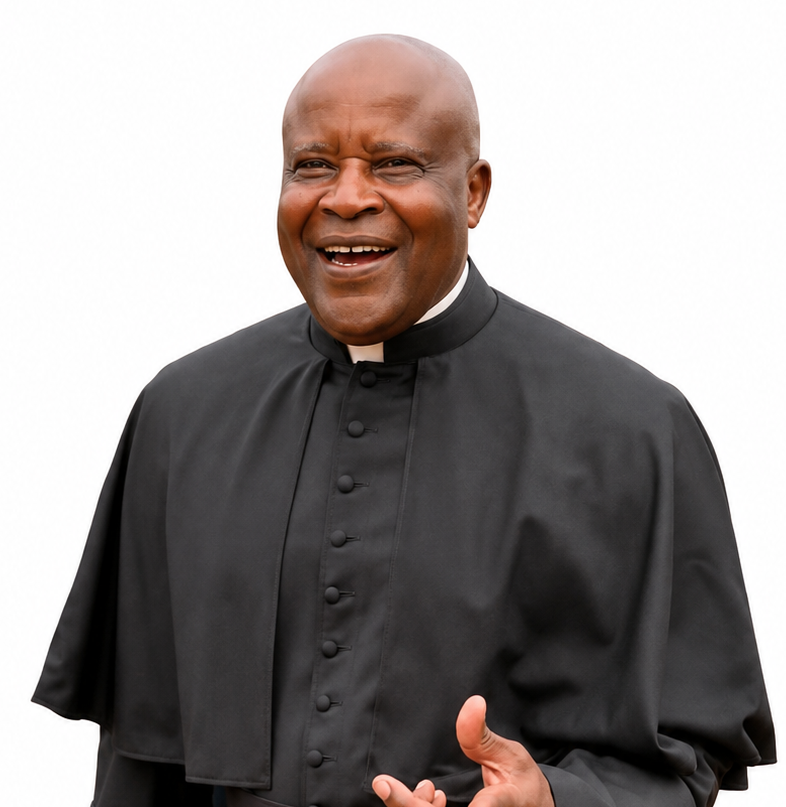
Fr. Emmanuel Katongole, Professor in the Department of Theology at the University of Notre Dame in South Bend, United States of America, was recently appointed Consultor to the Dicastery for Promoting Integral Human Development. With his experience in theology, peace and reconciliation, interfaith engagement, environmental care and work with young people, Fr. Katongole brings a wealth of experience to this new responsibility in the universal Church.
Ihad the privilege of speaking with him via Zoom about his appointment, his understanding of integral human development, his hope for young Africans, and his message to religious men and women in Uganda.
Fr. Emmanuel, congratulations again upon your appointment. When you received this news, what was your immediate reaction, and what does this appointment mean to you as a person?
When I first received the news, I was surprised, and very much humbled that I would be named as one of the Consultors, all the way from the village of Malube to the Vatican. It is an extraordinary journey. Who am I that I would receive this appointment from the Holy Father?
There was a great sense of gratitude, humility and honour. I feel both humbled and honoured at the same time. That was my immediate feeling, a sense of “wow,” even though I fully don’t yetknow what this calls for.
What do you think Pope Leo XIV and the Dicastery are asking of you, with your particular experience and expertise?
This is on a number of levels. I am a scholar, a theologian, teaching at the University of Notre Dame. My research is on issues of violence around the world, especially in Africa, different forms of violence: political, ethnic, religious and environmental, with a view of showing that Christianity and the Church make a difference within these different spheres of violence. They can represent a voice of hope, peace and reconciliation.
I am also the Director of the Ansari Institute for Global Engagement with Religion, which works with people from different religions. Can religions work together to contribute to peace in the world, bringing peace, healing and reconciliation? So, I am very familiar with working with other religions and denominations and with interfaith engagement.
I am also the founder and president of Bethany Land Institute, which responds to the cry of the earth and the cry of the poor, in the spirit of Pope Francis’ Laudato Si’. I am trying to realise Laudato Si’ in Africa.
I have already been working with the Dicastery, with Sr. Alessandra Smerilli, the new Prefect of the Dicastery for Promoting Integral Human Development, and Cardinal Fabio Baggio, the new Pro-Prefect. I have been consulting with them, and they, in turn, connect with what is going on at Bethany Land Institute.
They see that I can bring experience, expertise and insight to the work of the Dicastery. I think it is out of that that I have been called as a Consultor, and they expect that I contribute to the development of the Dicastery through that expertise.
“Integral human development” is a phrase we hear often. From your experience of Africa, what does it actually look like in the life of an ordinary person or community?
The Holy Father has different departments called Dicasteries, charged with different responsibilities. He appoints two types of people: members who work within the Dicastery and, from around the world, Consultors. Consultors advise the Dicastery in the fulfilment of its work.
I will not be living in Rome but will be called upon from time to time. I will provide expert advice to make sure that the Dicastery fulfils its mission, which is the promotion of integral human development.
The notion of Integral Human Development was articulated by Pope Paul VI in the encyclical Populorum Progressio, On the Development of Peoples, issued in 1967. In this encyclical, the Pope emphasized that full development cannot merely be economic; it has to be development for the whole person and for every person, economic, spiritual, cultural, material and historical. Development has to be integral. The Dicastery is for the promotion of that vision.
Pope Francis coined another term, integral ecology, a more encompassing term for integral development, in that you cannot just talk about the human person without talking about the health of the earth.
Integral development looks different depending on the context in which the person is. For me, it is like the Gospel: “I have come that they may have life and have it to the full.” — John 10:10.
Given your wide experience and engagement with young people, what gives you hope when you look at today’s young Africans?
I like working with young people, and they represent an incredible dimension of hope. Africa is a young continent, with about 70 per cent of the population below 25. The energy in young people and the drive are amazing.
They only lack leadership, options and opportunities. Seeing many unemployed is a frustrating. The experience Bethany Land Institute is offering me is to see that when you work with young people and give them a sense of confidence and identity of being a child of God, then give them options and leadership to channel that energy, you can see the hope.
All that young people need is to give them knowledge and opportunities. Bethany Land Institute is a microcosm of that hope on a small scale, but I can see that throughout Africa we can have these kinds of experiments, especially in rural areas.
This is where hope lies and this is what I teach: that hope is not idealistic or optimistic. It is in simple ways, like taking agency with one’s land.
Africa is a laboratory of hope, especially with young people. We need to harness that gift of young people without discouraging or dismissing them.
As you take on this new responsibility of serving the universal Church, what would you like the religious men and women of Uganda to pray for and work for alongside you?
Africa has been gifted with the rising of vocations to religious life, both men and women. This is the springtime of the Church.
We not only bring numbers; we are also bringing the energy that comes with youthfulness. A special gift that is coming out of Africa in religious life is that sense of joy, and we should not lose that. As Pope Francis reminds us, the joy of the Gospel is what we offer to the world.
The greatest gift I see in Africa is that gift of joy lived through our vocation, and for me, it gives me hope.
Our call to be religious is to cultivate deeper conviction and commitment and bring it to fruition in the world through different dimensions. This is the hope of the continent.
And this is what I ask them to pray for me in my line of work: that I may continue to exude that sense of joy and hope.
Bethany Land Institute is also working on a programme of partnership with the religious through the Association of Religious in Uganda, which offers another opportunity for collaboration in responding to the needs of our people and our common home.
